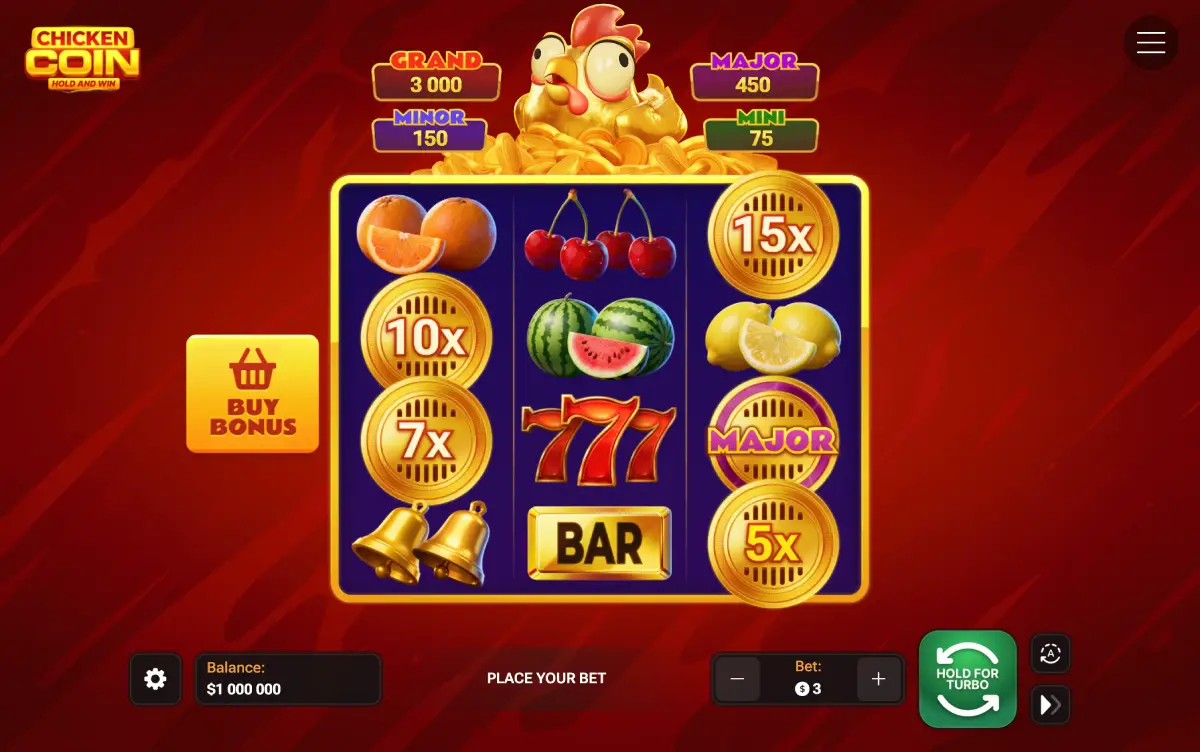
The core loop is short, almost aggressively so. You set a bet, you press start, the chicken walks. Each tile cleared bumps the multiplier — typical published steps range from 1.05x on tile one to north of 25x at the deep end. Press cash-out at any moment and the current multiplier is paid on your stake. Wait one tile too long and the chicken busts, your stake is gone, and the round resets in under three seconds.
Bet range and round structure
Bet sizes are set by the operator hosting the game, not by the studio. In the demo build, the slider runs from a token 0.10 to a 100 ceiling. Real-money lobbies typically narrow this to whatever the casino's slot policy permits, which is worth checking before depositing. There is no free-spin meta-round and no bonus-buy mechanic. Every round is a single sit-down decision.
Difficulty modes
Most builds expose three or four difficulty tiers (Easy, Medium, Hard, Hardcore). The trade-off is straightforward. Easy mode caps the multiplier curve shallow but bust frequency is low; Hardcore inverts that with eye-watering top multipliers and a punishing early-bust rate. Hit-frequency claims from the lobby UI are not independently audited, so treat them as marketing rather than gospel.
Auto-play and risk controls
An auto-cash-out field lets you pre-set a multiplier target (say, 2x), and the game will withdraw automatically if the chicken reaches it. This is the single most useful risk control on the panel. Players who try to "feel out" the cash-out manually round after round are the ones who give back the bankroll. Set a target, accept the misses, move on. None of this guarantees a winning session, but disciplined auto-cash-out behaviour is the closest thing this game has to a sustainable approach. For a step-by-step walkthrough, see our guide on how to play Chicken Coin.